Paragola Garden
Paragola Garden, nestled within the historic Moti Daman Fort, enchants with its classic pergola design—rows of vine-draped arches that create shaded, inviting walkways reminiscent of Mediterranean retreats. The comman man can adore how these sturdy stone structures blend seamlessly with lush greenery, offering cool respite from Daman’s tropical sun while framing stunning sea views. The layout cleverly mixes manicured lawns, vibrant flower beds bursting with seasonal blooms like bougainvillea and hibiscus, and subtle water features that add a soothing trickle, making it a peaceful oasis for evening strolls amid the fort’s timeless walls.
The Lighthouse
To safely guide their merchant sailing ships through foggy nights and rough currents, the Portuguese added a lighthouse sometime in the early 1600s, likely around the time of other fort upgrades. Picture a simple, one-story tower—cylindrical, striped in black and white for easy spotting from afar, topped with a lantern powered by oil lamps back then. Climb its spiral stairs today, and you’re stepping into that era, peering out over the endless ocean just like those old sailors.
India later built a taller, modern lighthouse nearby with a revolving light, but the original Portuguese one remains open to climbers for those epic sunsets. Now a tourist favorite, it’s free to visit from morning till evening, surrounded by fort ruins, cannons, and beaches—perfect for a relaxed walk or photos. Though it needs some upkeep, its views of Moti Daman, the sea, and distant Nani Daman keep it alive as a piece of living history.
Dominican Monastery
In 1567, Portuguese builders inside Moti Daman Fort erected this monastery to venerate Saint Dominic, embodying the Dominican Order’s ethos of preaching and knowledge-sharing. Its thick stone walls, elegant arches, and serene courtyards blended European sacred architecture with the fort’s defensive needs, symbolizing how colonizers imposed their spiritual worldview on Indian soil.
Here, Dominican friars cultivated a community of prayer, theological study, and teaching that drew scholars from afar, creating a microcosm of Catholic intellectual life amid bustling trade and military routines. This seminary thrived as a cultural crossroads, where rituals reinforced Portuguese identity while subtly influencing local converts through shared worship and education.
The Great Fall
A devastating earthquake razed much of the structure, claiming lives and fracturing its vibrant community, turning a hub of devotion into haunting ruins that echo human fragility. These remnants today invite reflection on how natural forces disrupt imposed cultures, leaving layered stories of resilience in Daman’s collective memory.
The Daman Estuary
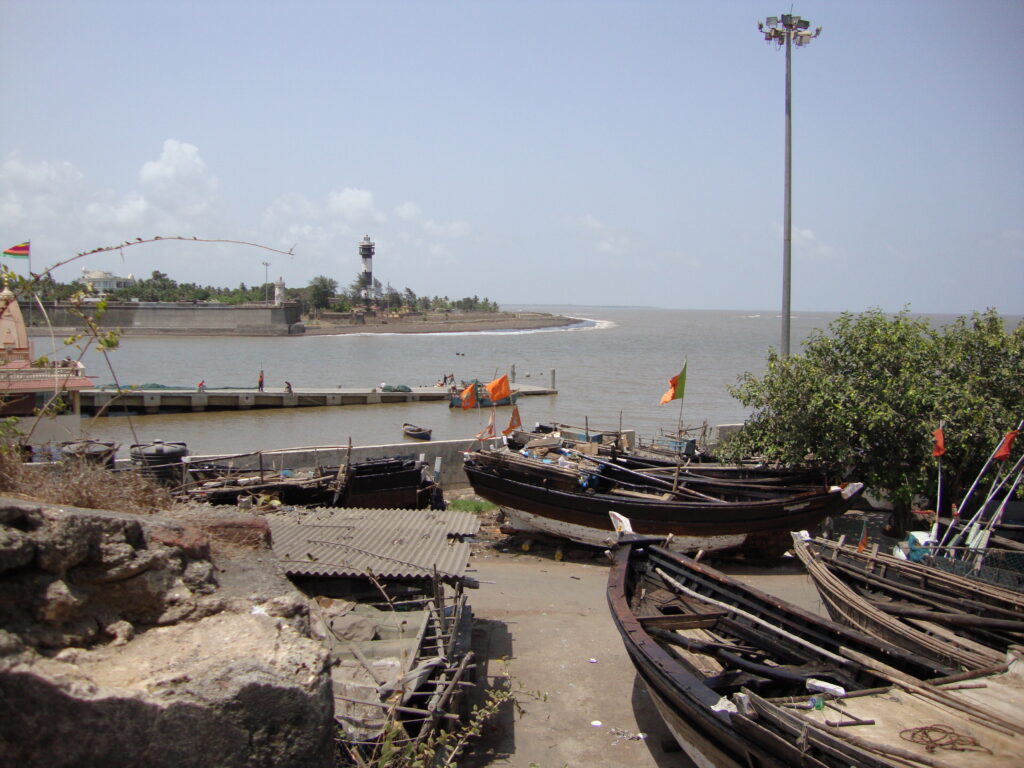
The Daman Estuary, formed where the Daman Ganga River meets the Arabian Sea, has long served as a vital gateway for trade and defense in western India. Shaped over millennia by river sediments and tides, it splits the coastal city of Daman into two parts, creating a natural harbor that drew settlers and powers alike.
Long before recorded history, the estuary area around Daman buzzed with local communities fishing and trading spices along Gujarat’s coast. By the 8th to 13th centuries, Chowda Rajput rulers held it as a stronghold, later passing to Muslim sultans of Gujarat who used the sheltered waters for ships sailing to Persia and Arabia. The river mouth’s calm provided a safe spot amid stormy seas, making it a busy hub for early maritime activity.
In 1523, Portuguese sailor Diogo de Melo stumbled upon Daman’s shores during a storm while heading to the Persian Gulf, sparking their interest in this strategic spot. They fully seized it in 1559 after negotiations and force, turning the estuary into a key base for controlling trade routes between India, Europe, and Asia. The Portuguese built forts right on the estuary banks to protect against rivals, exporting goods like opium from here to China.On the estuary’s north bank in Nani Daman (Little Daman), they constructed Fort São Jerónimo starting in 1615, mainly to fend off Mughal invasions after a 1611 raid pillaged nearby lands. Across the water in Moti Daman (Big Daman), a larger 16th-century fort guarded the southern side, with high walls and cannons aimed at both sea and land threats. These twin strongholds made the estuary a fortress hub, housing garrisons, churches, and warehouses for over 400 years of rule.
The estuary thrived as a commercial center under Portugal, with ships docking to load textiles, spices, and later opium, evading competitors like the British East India Company. It faced attacks from Mughals, Marathas, and others, but the forts held firm, ensuring Portuguese dominance in the Gulf of Khambhat. Local people adapted, blending Indian customs with European influences around the busy river mouth.
Even after India’s 1947 independence, Portugal clung to Daman until December 1961, when Indian forces swiftly liberated the estuary area. Today, the estuary supports fishing, tourism, and coastal life, with the old forts standing as reminders of its layered past.